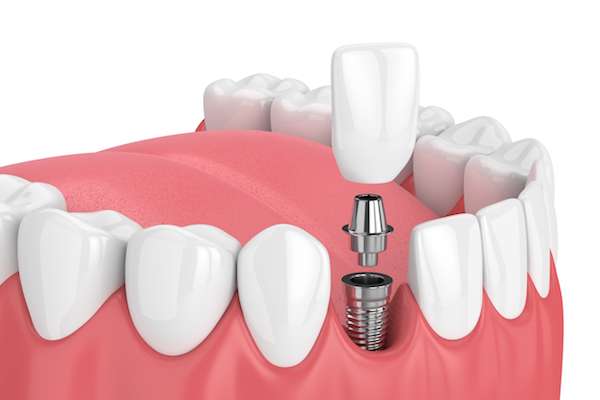
 Dental implant surgery is one of the most reliable and long-lasting ways to replace missing teeth. However, since this surgery involves inserting an artificial tooth root into the jawbone, it almost always causes some amount of pain. Before undergoing this surgery, many dental patients are worried about the level of pain they may experience afterward and how long it will last.
What is involved in dental implant surgery?
In order to understand how painful the implant process may be, it is helpful to realize what happens when a patient receives an implant. In many cases, after a patient has a natural tooth removed, but before an implant is placed, the area is prepared with a bone graft. These grafts encourage the production of new bone, which will strengthen the jawbone and help ensure the implant properly integrates with the bone.
In dental implant surgery, a patient's dental professional drills a hole into the jawbone. A metal post is placed into the hole. This metal post works as an artificial tooth root. The post needs to be given time to osseointegrate, or to allow the bone from the patient's jaw to grow through it. Although this process may often take months, it is essential for a healthy and stable implant. The abutment, which is a component to which the dental crown will be attached, usually is not placed on the post until osseointegration is complete.
Sometimes, the dentist needs to perform a smaller surgery to place the abutment. This is a minor surgery that only involves the gums. It may cause some bleeding and swelling, but pain from having the abutment placed is less severe than any pain experienced after placing the metal post.
How painful is the implant surgery?
Dental implant surgery involves trauma to both the gums and the jaw. The surgery itself should not involve any pain since the mouth will be numbed. As the numbness wears off, though, patients will often feel some level of pain.
Many dental professionals provide pain medication to help manage discomfort at the implant site. In some cases, post-surgery pain is mild enough that it can be managed with over-the-counter pain medication. Generally, a single implant will cause less discomfort than a surgery where multiple implants are placed. Patients will usually have pain up to 10 days after the procedure, but the pain may resolve before 10 days.
If excessive discomfort persists after the 10-day point, it is important for patients to contact a dental professional immediately. Prolonged pain may be a sign that the implant site has become infected. If this is the case, the dental professional will need to act quickly to save the implant.
Check out what others are saying about our dental services on Yelp: Dental Implant Surgery in Weatherford, TX.
Conclusion
No dental patient looks forward to any type of pain. However, persons considering dental implant surgery should not let a fear of post-surgery discomfort discourage them from pursuing the procedure. Implants are designed to be a permanent tooth replacement, and once completed, the implant process will leave a patient with a beautifully restored smile.
Request an appointment or call Millar Family Dentistry at 817-885-5214 for an appointment in our Weatherford office.
Related Posts
Searching for a "dentist near me" online can feel easier when patients know which details matter before scheduling a visit. A local dental office can provide routine cleanings, dental exams, tooth repairs, and urgent care when symptoms arise. The right choice depends on practical needs, oral health goals, and how well the office communicates care…
Clear aligners are made for the sole purpose of aligning your teeth. The aligners are fragile and can break or crack under intense pressure. This renders them ineffective. Here is why you should remove aligners while eating.Clear aligners are plastic in nature. These are made from a thermoplastic material that cures into hard plastic. This…
Dental crowns are the most popular way to restore teeth that are in bad shape due to decay, injury or other imperfections. Modern-day dentistry has allowed for the evolution of many different material choices, all of which offer their own pros and cons. Keep reading to learn about three options that general dentists recommend. Outlined below…